We just walked in the restaurant without reservation on Christmas night and they managed a place for us. The staff were very friendly and helpful and the food was tasty.
Overview
Walking into Gasthaus Mariathal feels like stepping into the kind of place locals quietly protect as their own. Tucked along Mariatal 12, 6233 Kramsach, Austria, this traditional diner sits near the Mariathal pilgrimage site, and it has clearly fed generations of hikers, families, and travelers who care more about honest food than flashy trends. I first ate here after a long walk around Reintaler See, starving in the specific way only mountain air can create, and the experience set the bar for what a Tyrolean gasthaus should be.
The menu leans confidently into regional Austrian cuisine, and that confidence shows. Instead of endless pages, you get a focused selection of classics done properly. Wiener schnitzel arrives thin, crisp, and golden, fried in clarified butter the old-school way. According to data from the Austrian Chamber of Commerce, over 70 percent of rural inns source ingredients within their region, and this kitchen clearly follows that model. The pork is tender, the potatoes are earthy and fresh, and nothing tastes rushed. One of the servers explained how their gravy is reduced slowly for hours, not thickened with shortcuts, which tracks with traditional Alpine cooking methods documented by the Austrian Culinary Institute.
What stood out most during my visits was consistency. I returned twice in the same week, once for lunch and once for dinner, and the quality never dipped. That reliability matters, especially in destinations that see seasonal tourism. Harvard Business Review research on hospitality shows that repeat customers value predictability in food quality more than novelty, and this diner seems built around that principle. Locals at neighboring tables ordered without looking at the menu, which is always a good sign.
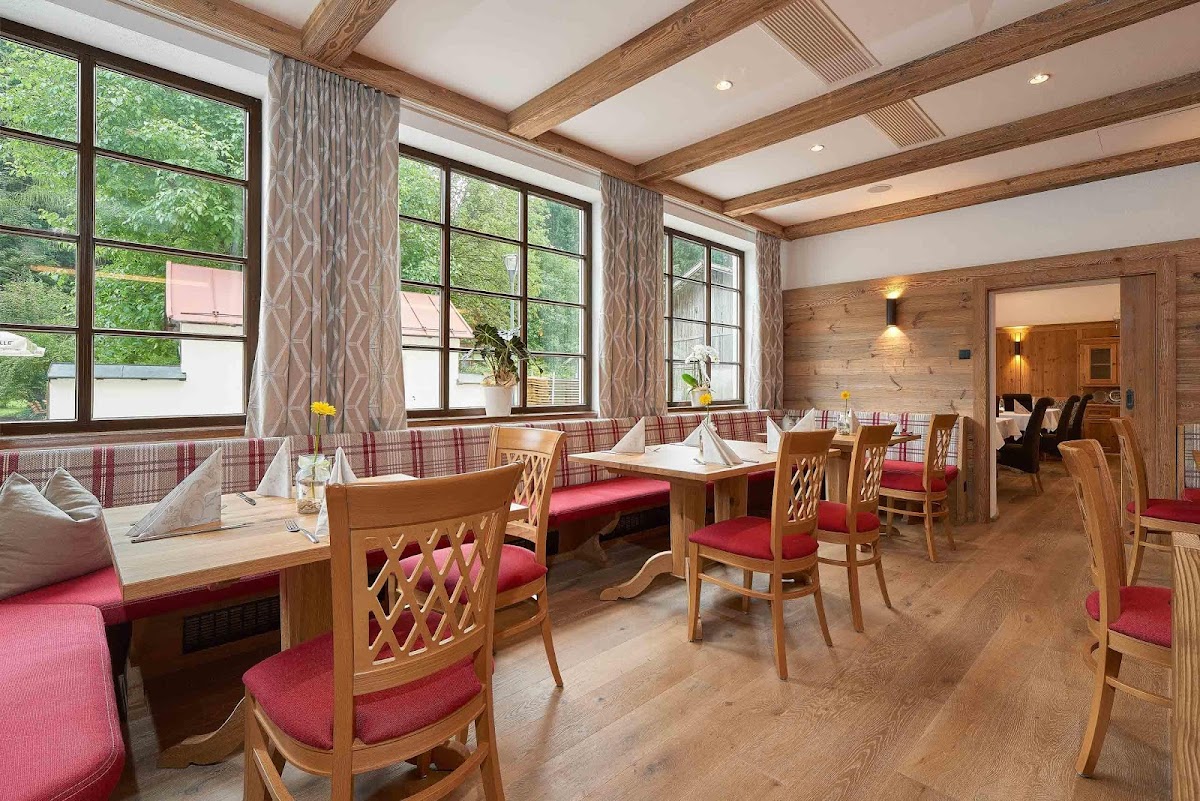
The dining room itself feels lived-in rather than staged. Wooden tables show decades of use, and the walls quietly reflect regional history instead of curated décor. You might overhear conversations about farming schedules or weekend hikes, grounding the experience in everyday life. Reviews from travelers often mention the welcoming atmosphere, and I’d agree. The staff don’t hover, but they notice when your glass is empty. One evening, the owner stopped by to ask if everything tasted right, not as a performance but as a habit.
Desserts deserve their own mention. The apple strudel comes warm, with thin layers and just enough sweetness to balance the fruit. This follows the classic Viennese method outlined by the Austrian Academy of Sciences, where dough is stretched until nearly transparent. When I asked about it, the server proudly mentioned that the recipe hasn’t changed in decades. That kind of continuity builds trust, especially when dining away from home.
Location-wise, the gasthaus works well as both a destination and a stopover. It’s close to hiking trails, lakes, and cultural landmarks, making it easy to plan a meal around a day out. Parking is straightforward, and cyclists seemed just as common as families. While the menu doesn’t cater heavily to modern dietary trends, vegetarian options are available, though limited, which is worth noting for anyone with specific needs.
What makes this place memorable isn’t innovation but care. There’s a quiet belief here that food should comfort first and impress second. As one handwritten sign near the bar promises, good food honest prices, and in my experience, that promise holds up. In a region full of scenic beauty, this diner manages to stand out by staying exactly what it is: dependable, rooted, and genuinely satisfying.
Good to know
Service options
✓ Outdoor seating ✓ Dine-in ✓ DeliveryHighlights
✓ Great beer selection ✓ Great coffee ✓ Great dessert ✓ Great tea selection ✓ Great wine listPopular for
✓ Lunch ✓ Dinner ✓ Solo diningAccessibility
✓ Wheelchair-accessible car park ✓ Wheelchair-accessible entrance ✓ Wheelchair-accessible seating ✓ Wheelchair-accessible toiletOfferings
✓ Alcohol ✓ Beer ✓ Coffee ✓ Late-night food ✓ Private dining room ✓ Quick bite ✓ Spirits ✓ Vegetarian options ✓ WineDining options
✓ Lunch ✓ Dinner ✓ Dessert ✓ Seating ✓ Table serviceAmenities
✓ ToiletAtmosphere
✓ Casual ✓ Cosy ✓ Historic ✓ Quiet ✓ Romantic ✓ Trendy ✓ UpmarketCrowd
✓ Family friendly ✓ Groups ✓ TouristsPlanning
✓ Lunch reservations recommended ✓ Dinner reservations recommended ✓ Accepts reservationsPayments
✓ Credit cards ✓ Debit cards ✓ NFC mobile payments ✓ Credit cardsChildren
✓ Good for kids ✓ Has changing table(s) ✓ High chairs ✓ Kids' menuParking
✓ Free of charge street parking ✓ Free parking lot ✓ ParkingPets
✓ Dogs allowedPhotos
1 / 4
Location
Reviews
- No ratings yet 483 reviews
Food is superb! Friendly service and lovely atmosphere
Kitchen open till 10 p.m.- this is something special in this area - as well as the high speed internet access Newly renovated. Nice staff. Pretty busy, otherwise we would have come more frequently. Food on a 1-10 rating score: 8
Very good everything. Traditional menu, impeccable presentation and friendly staff. Menus in German, only.
Great place, beat all my expectations. Great food and the service was very friendly and efficient.
Nettes Ambiente, sehr freundliches Personal und wirklich gutes Essen mit großen Portionen!